Pathways.org Baby Milestones
- 4.7
- Rating
- 100.00K
- Installs
- Free
- Price

 Analysis by App-foxy
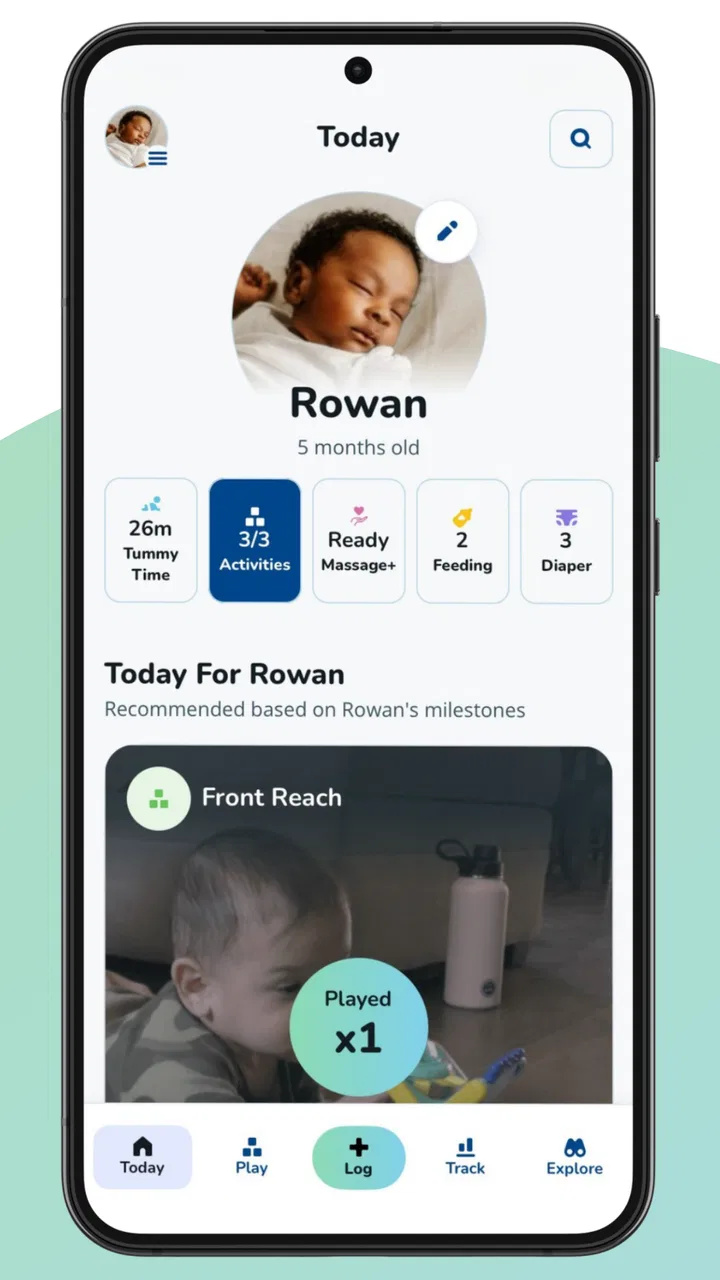
Parenting apps can easily become another source of pressure, especially when they turn a baby’s development into a list of tasks to complete. My experience with Pathways.org Baby Milestones is more reassuring: it works best as a calm reference point for play, movement, and observation rather than as a test your baby has to pass. The app comes from Pathways.org, a developer focused on early development, and its central idea is practical—use simple baby activities and a Tummy Time tracker to make everyday interaction more intentional.
I found it most useful during ordinary moments when I wanted an idea but did not want to search through a long parenting forum. It is a free parenting app for Everyone, and its audience is clearly parents or caregivers who want guidance they can apply at home. It is not a replacement for a pediatric professional, and I would not use it to diagnose a delay. Used with that boundary in mind, it can turn a few spare minutes on the floor into a more purposeful play session without making the experience feel clinical.
How the app feels during everyday use
I find the app most useful as a quick preparation tool: I can consider an activity before play begins, then focus on the baby instead of the screen. That everyday rhythm also makes it easier to judge whether the tracker supports a routine or starts to feel like another task. The next section looks at how to keep its guidance practical without letting tracking take over.
You May Also Like

 Blood Strike: 2.5 Anniversary
Blood Strike’s Loadouts Turn Every Drop Into a Tactical Gamble
A close look at Blood Strike’s custom loadouts: how fast access to signature weapons reshapes its battle royale rhythm, rewards preparation, and narrows the gap between fights.

 Pandora - Music & Podcasts
Pandora’s Music Is Easy to Start, but Harder to Recover
Pandora’s strength is its low-effort path from a seed to a station. Its weak spot is how much confidence it asks you to place in connection, setup, and quiet recovery.

 8 Ball Pool
 Is Built on Rivalries, Rematches, and Routine
A close look at the rivalries, rematches, shared routines, and unanswered safety questions that turn a quick pool match into a persistent mobile community.

 Samsung Music
’s Quiet Strength Is Playing What You Already Own
Its reach comes less from spectacle than from dependable access to a personal library. That simplicity is both the app’s strongest retention engine and its ceiling.

 AccuWeather: Weather Radar
AccuWeather Review: A Quick, Clear Forecast for Everyday Decisions
For everyday plans, the best forecast is the one you can understand quickly. AccuWeather makes rain timing, radar, and local conditions easy to act on, with a few trade-offs.

 Hill Climb Racing
Why Hill Climb Racing Still Turns Crashes Into One More Run
A tiny car, a bumpy hill and one more upgrade: Hill Climb Racing keeps resurfacing because its simple chaos makes every near-miss feel personal.
More From Our News Desk



Speed expectations when you need an activity quickly
The strongest performance impression is not about flashy animation or demanding interaction. This is a focused utility, so what matters is whether I can get from opening the app to a useful activity without feeling lost. The layout and purpose make that expectation reasonable: I would open it before floor time, choose an age-relevant idea, and then put the phone aside. It is the kind of app that should support the moment rather than compete with it.
That simplicity also affects how I judge speed. A parenting app does not need to behave like a game with constant transitions. It needs to present guidance clearly enough that a tired parent can understand it while holding a baby, preparing a mat, or working around a short attention span. Pathways.org Baby Milestones is better suited to quick checks than to long browsing sessions. I would not install it expecting a large entertainment experience; I would install it for a repeatable routine.
One useful habit is to look through the activity ideas before the day becomes busy. That small preparation changes the app from something I consult in a rush into a quiet source of options. I can then choose an activity that matches the space, the baby’s mood, and the time available. This is a more realistic workflow than assuming every session will be a complete developmental exercise.
The Tummy Time tracker adds a second kind of speed expectation. Tracking is valuable only when it takes less effort than remembering. I would use it immediately after a short session rather than trying to reconstruct a whole day later. That approach keeps the record more honest and avoids turning the tracker into homework. It also makes the app useful for parents who want a gentle sense of consistency without timing every minute obsessively.
What happens during heavier-use moments
The app becomes more demanding from a practical point of view when it is used repeatedly throughout the day. A parent may open it before a morning play session, check another idea after a nap, and return to the tracker later. Those repeated visits are where a parenting tool proves its value. The most helpful design choice is not necessarily the number of activities; it is whether the app helps me make a decision quickly and then get back to the child.
I would avoid treating every suggested activity as something to complete in sequence. Babies have changing energy levels, and an activity that works after a nap may be unsuitable when the baby is hungry or overstimulated. The better workflow is to use the app as a menu. Pick one idea, try it briefly, watch the baby’s response, and stop when the interaction stops being enjoyable. That makes the guidance more flexible than a rigid daily program.
A realistic example is a caregiver with ten minutes before leaving the house. Instead of opening a general search engine and sorting through conflicting advice, I could check the app for a simple movement or floor-play suggestion, prepare a safe space, and try it for a few minutes. If the baby turns away or becomes unsettled, the session ends; the app has still done its job by providing a starting point. The value is in reducing decision fatigue, not in forcing a longer session.
During heavier use, the Tummy Time tracker can also become a source of unnecessary pressure if it is treated like a scoreboard. I think it works better as a memory aid. A brief entry can help a caregiver notice patterns across days, but it should not replace attention to comfort, fatigue, or the baby’s individual temperament. This is one of the app’s important trade-offs: tracking can make routines visible, yet too much focus on the record can distract from the actual interaction.
Another practical tip is to keep the phone out of the baby’s immediate play area once the activity begins. The app is most successful when it helps prepare the session and then disappears from attention. That is especially important for tummy time, where the caregiver’s position, encouragement, and observation matter more than repeatedly checking the screen.
Reliability and the role of the developer
Pathways.org gives the app a clear identity. It does not feel like a broad baby-content hub trying to cover every parenting question. The focus on milestones, play, and tummy time makes it easier to understand what the app is for and when it belongs in a routine. I appreciate that narrower purpose because parents often need one dependable starting point rather than a huge collection of unrelated articles.
The app has an average rating of 4.9 from around 756 ratings, with 68 written reviews, and it has passed 50K+ installs. Those figures suggest that it has found a receptive audience, although ratings alone cannot tell me whether it will fit every family’s routine. I read that response as encouragement to try it, not as proof that every activity or screen will suit every baby.
Reliability in a parenting app has two sides. The first is technical: it should open consistently, preserve the usefulness of its tracker, and remain understandable when I return after a break. The second is practical: its advice should be presented in a way that leaves room for individual differences. I value the second side just as much as the first. A perfectly stable app would still be unhelpful if it made normal variation seem alarming.
For that reason, I would pair its suggestions with guidance from a pediatrician or other qualified health professional whenever I had a concern about development. The app can help me notice what my baby is doing and offer ideas for interaction, but it should not be the authority for medical decisions. That distinction is not a weakness unique to this app; it is essential whenever a milestone tool is used by a worried parent.
Recovery matters too. If I stop using the app for several days, I would want to return without feeling that I had failed. The tracker is most constructive when I can resume from the present moment instead of trying to recreate an incomplete history. In everyday parenting, interruptions are normal, so a tool that supports restarting is more useful than one that rewards perfect consistency.
Device constraints and the best setting for use
The app supports devices running Android 8.0 or later, which is helpful for families using an older Android phone rather than a recent flagship. That compatibility broadens its practical reach, but the experience will still depend on the particular device, available storage, and general condition of the phone. I would not expect an older handset to feel identical to a newer one, especially if many other apps are open.
Its resource demands appear appropriate for a focused parenting tool rather than a graphics-heavy game. Still, I would reserve judgment on battery use or loading behavior on a specific phone because those details vary with the device and operating system. A caregiver who relies on an older phone may want to keep it charged before a long day, not because this app is known to be demanding, but because parenting routines rarely leave much room for technical interruptions.
The screen itself is a constraint. A phone is convenient for checking an activity, but it is not ideal as the center of a baby’s play session. Small text, glare, or a device placed too close to the floor can make the experience less comfortable. I would read the instructions first, set the phone aside, and use my voice and presence to guide the interaction. This also reduces the temptation to turn developmental play into passive screen time.
Another constraint is the physical environment. The app can suggest an activity, but it cannot make a carpet safe, remove nearby hazards, or judge whether a baby is ready to continue. I would prepare the floor before opening the tracker and keep direct supervision in place. That is a concrete difference between a digital guide and an in-person professional: the app offers structure, while the caregiver remains responsible for the setting.
Families using iOS should check the relevant store page for device compatibility before downloading, while Android users can look for the stated Android requirement. The app is free, which removes one barrier to trying it, but free access does not mean it will be the right tool for every household. Some parents may prefer printed guidance, a professional-led class, or a basic note on their phone if they do not want another app in their routine.
Where it beats ordinary alternatives
The usual alternatives are broad web searches, social media posts, milestone charts, and advice from friends or relatives. Those options can be useful, but they often create a different problem: too many opinions and too little structure. Pathways.org Baby Milestones gives the parent a narrower path from concern or curiosity to a concrete activity. That is its clearest advantage over searching the open web.
Compared with a simple notes app, it offers more purpose because the activities and tummy-time tracking are connected to early development. A notes app may be faster for recording observations, but it does not provide the same starting point when I do not know what to try. Compared with a milestone chart, this app is more action-oriented. A chart tells me what I may notice; the app encourages interaction that can help me observe movement and engagement in everyday play.
On the other hand, a professional consultation is better when I need individualized interpretation, reassurance about a concern, or a plan adapted to a medical history. A general parenting app cannot see the baby, ask follow-up questions, or adjust advice with the nuance of an in-person assessment. I would choose this app for ideas and routine support, not for answers that require clinical judgment.
It is also less suitable for parents who dislike tracking. If recording tummy time makes you anxious, the tracker may feel like an obligation instead of help. In that situation, using only the activity guidance—or skipping the app in favor of relaxed play—may be the healthier choice. The strongest benefit comes when the tool lowers stress rather than adding another standard to meet.
Three ways to get more value from it
Prepare before the baby is ready to play. Browse one or two suitable ideas earlier in the day, then choose based on mood and available space. This prevents the phone from becoming the main object during the session and makes the app faster to use when time is short.
Use the tracker as a reflection tool, not a target. Record sessions close to when they happen, but judge success by comfort and engagement rather than by filling a quota. This preserves the useful memory function without turning development into a competition.
Compare app suggestions with real observations. Notice how the baby responds to position, voice, toys, and rest. If an activity consistently causes distress, stop and discuss concerns with a professional rather than repeating it because it appears in a digital routine.
These habits reveal a less obvious strength: the app can support better observation when it is used briefly and deliberately. It is not simply a library of things to do. It can help a caregiver pause, notice what the baby is comfortable with, and remember which kinds of interaction were worth trying. That is more valuable than opening it repeatedly without a plan.
My performance verdict for parents
Pathways.org Baby Milestones is a focused, free parenting app that earns its place when a caregiver wants practical developmental play ideas and a simple way to remember tummy-time sessions. I like its clear purpose, its suitability for quick checks, and the fact that it can fit into a routine without requiring a long, uninterrupted session. The Android requirement of 8.0 or later also makes it relevant to people who are not using the newest phone.
The current version is 2.17.0, and the app was released on Jul 26, 2022. Its strong average rating and growing install base make it an easy app to consider, but I would still approach it with realistic expectations. It will not replace professional advice, guarantee developmental progress, or remove the need for supervision. Its performance value is mainly organizational and practical: it helps me decide what to try and gives me a place to record a routine.
I would recommend it to new parents, grandparents, and caregivers who want a gentle structure for floor play without paying for a subscription. I would especially recommend trying it when the alternative is repeatedly searching for ideas or feeling unsure how to begin tummy time. I would skip it if tracking tends to increase anxiety, if I wanted detailed medical assessment, or if I already had a trusted professional plan that covered the same needs.
My final view is positive but measured. The best result comes when the app stays in the background and the baby stays at the center. Use it to prepare, observe, and remember; do not let it turn normal variation into a pass-or-fail test. For that role, Pathways.org Baby Milestones is a sensible companion for everyday early-development play, especially for families looking for approachable guidance rather than another demanding screen experience.
FAQs for Pathways.org Baby Milestones
01What is the purpose of the Pathways.org Baby Milestones app?
The Pathways.org Baby Milestones app is designed to help parents track and understand their baby's developmental milestones. It provides a comprehensive guide to physical, cognitive, and social-emotional milestones for infants and toddlers. This app aims to support parents in monitoring their child’s progress and identifying potential areas of concern early on.
02Is the Pathways.org Baby Milestones app free to use?
Yes, the Pathways.org Baby Milestones app is completely free to download and use on both Android and iOS platforms. There are no in-app purchases or subscription fees, making it accessible for all parents who wish to track their child's developmental progress without financial barriers.
03How accurate is the information provided by the Pathways.org Baby Milestones app?
The app is developed by Pathways.org, a reputable organization specializing in child development. It offers evidence-based information, created in collaboration with pediatric therapists and medical professionals, ensuring that the guidance and milestones are current and valid. However, it is always recommended to consult a healthcare professional for personalized advice.
04Can I use the Pathways.org Baby Milestones app for multiple children?
Yes, the app allows you to track milestones for multiple children. You can create separate profiles for each child, making it easy to monitor their individual progress. This feature is especially useful for parents with twins, triplets, or children of different ages, allowing for personalized tracking in a single app.
05Does the Pathways.org Baby Milestones app provide notifications or reminders?
The app includes a feature that sends reminders and notifications to help parents stay on top of their child's developmental milestones. You can customize these alerts to receive timely reminders about upcoming milestones, ensuring you don't miss important developmental stages. This feature aids in proactive monitoring and support.
Pros
- Comprehensive milestone tracking.
- User-friendly interface.
- Expert-backed resources.
- Includes video tutorials.
- Customizable reminders.
Cons
- Limited language options.
- Requires internet for videos.
- No dark mode available.
- In-app ads can be intrusive.
- Limited offline access.

Pathways.org Baby Milestones
Gallery